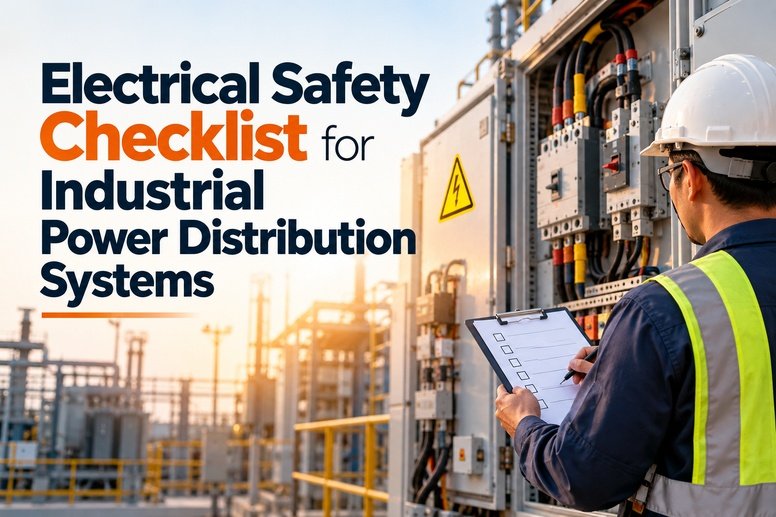
Electrical Safety Checklist for Industrial Power Distribution Systems
Industrial facilities depend on reliable electrical systems to keep machinery, production lines, lighting, automation and essential operations running smoothly. However, electrical equipment can become a serious safety risk when it is poorly maintained, incorrectly installed or used without proper precautions. A practical electrical safety checklist helps maintenance teams identify potential hazards before they result in equipment damage, electrical fires, downtime or injuries.
From inspecting cables and switchgear to checking earthing, protective devices and control panels, every part of an industrial electrical system requires regular attention. This guide covers essential industrial electrical safety practices that can help businesses improve power distribution safety and maintain safer working environments.
Why Electrical Safety Matters in Industrial Facilities
Industrial electrical systems often operate under high loads and demanding conditions. Faulty connections, damaged insulation, overloaded circuits or inadequate protection can quickly create dangerous situations.
Proper electrical safety in industries helps organisations:
- Reduce the risk of electrical shocks and burns
- Prevent short circuits and electrical fires
- Protect expensive electrical equipment
- Minimise unexpected production downtime
- Improve compliance with workplace safety requirements
- Extend the service life of electrical components
A consistent inspection and maintenance routine is therefore essential for every industrial power distribution system.
Electrical Safety Checklist for Industrial Power Distribution
Use the following checklist during scheduled inspections. The frequency of each inspection should be determined according to the equipment, operating environment and applicable safety requirements.
1. Inspect Cables and Wiring
Cables are among the most important components of an electrical distribution network. Inspect them for cuts, exposed conductors, cracked insulation, overheating, loose connections and signs of mechanical damage.
Also check whether cables are properly supported and routed away from excessive heat, moisture, sharp edges and moving machinery.
2. Check Electrical Panels and Switchboards
Electrical panels should remain clean, dry and accessible. Inspect panel doors, locks, labels, busbars, terminals and internal connections.
Look for:
- Burn marks or unusual discolouration
- Loose terminals
- Corrosion
- Dust accumulation
- Signs of overheating
- Missing covers or protective barriers
Clear identification of circuits can also make emergency isolation faster and safer.
3. Verify Earthing and Bonding
Effective earthing is a fundamental part of power distribution safety. It provides a controlled path for fault current and helps reduce the risk of electric shock.
Regularly inspect earthing conductors, connections, earth electrodes and bonding arrangements. Earth resistance should also be tested at suitable intervals using appropriate testing equipment.
4. Test Circuit Protection Devices
Circuit breakers, fuses, overload relays and other protective devices must be correctly rated for the connected loads.
Check that protective devices:
- Are correctly sized
- Operate properly
- Are free from physical damage
- Have suitable interrupting capacity
- Are coordinated with downstream equipment
Periodic testing is particularly important for critical distribution systems.
5. Inspect Transformers and Distribution Equipment
Transformers and other high-load distribution equipment should be checked for overheating, abnormal noise, oil leakage where applicable, unusual odours and physical deterioration.
Ventilation around transformers and electrical rooms should remain unobstructed. Any abnormal operating condition should be investigated promptly instead of being ignored.
Industrial Power Distribution Safety: Workplace Practices
Equipment inspections alone are not enough. Safe working practices are equally important.
Control Access to Electrical Areas
Electrical rooms, substations and distribution panels should only be accessible to authorised and appropriately trained personnel. Warning signs and restricted-access arrangements should be clearly maintained.
Follow Lockout/Tagout Procedures
Before maintenance or repair work, the relevant energy sources should be isolated according to the facility's approved lockout/tagout procedure. The equipment should not be considered safe simply because a switch has been turned off.
Use Appropriate PPE
Personnel working on or around electrical equipment should use PPE appropriate to the task and identified hazards. Depending on the work, this may include insulated gloves, protective footwear, eye protection, face protection and suitable protective clothing.
Keep Electrical Areas Clean
Water, oil, dust, combustible materials and waste should not be allowed to accumulate around electrical equipment. Good housekeeping can significantly reduce avoidable electrical hazards.
Electrical Safety Checklist for Routine Maintenance
| Inspection Area | What to Check |
|---|---|
| Cables | Insulation, damage, routing and connections |
| Electrical Panels | Terminals, covers, cleanliness and overheating |
| Earthing | Conductors, connections and test results |
| Circuit Breakers | Rating, condition and operation |
| Transformers | Temperature, ventilation and physical condition |
| Switchgear | Contacts, insulation and mechanical operation |
| Emergency Systems | Isolation points, alarms and accessibility |
| PPE | Availability, condition and suitability |
| Labels | Circuit identification and warning signs |
| Work Areas | Cleanliness, access and moisture control |
Common Electrical Safety Mistakes to Avoid
Some hazards develop because small problems are repeatedly overlooked. Common mistakes include:
- Ignoring overheating: Hot terminals or cables can indicate excessive current or loose connections.
- Using damaged cables: Temporary repairs should never replace proper cable replacement where safety is compromised.
- Overloading circuits: Equipment should operate within the capacity of the distribution system.
- Skipping inspections: Electrical faults can develop gradually and may not be visible during normal operation.
- Poor documentation: Inspection results, test records and maintenance activities should be properly documented.
- Allowing unauthorised work: Electrical maintenance should be performed only by competent and authorised personnel.
How Electrotech Can Support Safer Electrical Systems
A dependable industrial electrical setup requires quality components as well as proper installation, inspection and maintenance practices. Electrotech provides electrical products and solutions designed to support reliable industrial power distribution and electrical protection requirements.
Whether your facility needs electrical protection components, distribution equipment or dependable electrical accessories, selecting suitable products is an important part of an overall safety strategy. Businesses should always assess product specifications, operating conditions and applicable standards before installation.
Conclusion
A well-maintained electrical system is an important part of a safe and productive industrial facility. Following a structured electrical safety checklist can help teams identify damaged components, overloaded circuits, inadequate protection and other potential hazards before they become serious problems.
From cable inspections and earthing tests to protective-device checks and safe maintenance procedures, every step contributes to better industrial electrical safety. Regular inspections, competent personnel and reliable equipment together form the foundation of effective industrial power distribution and safer day-to-day operations.
Looking for dependable electrical components for your industrial applications? Connect with Electrotech to explore suitable solutions for your power distribution and electrical safety requirements.
Frequently Asked Questions (FAQ's)
1. What is an electrical safety checklist?
An electrical safety checklist is a structured list of inspections and safety checks used to identify potential electrical hazards. It can cover cables, panels, earthing, circuit protection, switchgear, transformers, PPE and workplace conditions.
2. Why is industrial electrical safety important?
Industrial electrical safety helps reduce risks such as electric shock, fires, equipment failures and unexpected downtime. It also supports safer maintenance practices and helps organisations maintain reliable electrical operations.
3. How often should industrial electrical systems be inspected?
Inspection frequency depends on the type of equipment, operating environment, usage and applicable requirements. Critical equipment may require more frequent checks, while comprehensive testing should follow an established maintenance programme.
4. What should be checked in an electrical panel?
Electrical panels should be checked for loose connections, overheating, damaged insulation, corrosion, dust, missing covers, proper circuit identification and the condition of protective devices.
5. Why is earthing important in power distribution safety?
Earthing helps provide a path for fault current and can reduce the risk of dangerous touch voltages. Proper earthing should be designed, installed and tested according to applicable electrical requirements.